The unease in the private credit market has spread to Wall Street; as many funds set withdrawal limits, some major U.S. banks have tightened lending to the trillion sector.
Concerns over valuations and transparency, along with the high-profile bankruptcies of auto parts supplier First Brands and car dealer Tricolor, have negatively impacted the market.
According to Moody’s, as of December 31, U.S. banks had approximately $348 billion in credit debt to non-depository financial institutions and $341 billion to private equity funds.
Shares of alternative asset managers have also declined this year due to concerns about the valuations of the software companies they own or finance; as rapid advancements in artificial intelligence pose a threat to traditional business models.
Below is a list of some recent moves by Wall Street’s largest banks and private equity funds:
BLUE OWL

Private capital firm Blue Owl Capital said on April 2 it would cap withdrawals from two retail-focused funds after receiving a surge in redemption requests.
Investors asked to withdraw 40.7% of the shares in technology-focused Blue Owl Technology Income Corp (OTIC), and 21.9% of shares in larger fund Blue Owl Credit Income Corp (OCIC).
Blue Owl in late February said it was selling $1.4 billion in assets from three of its credit funds so it can return capital to investors and pay down debt, and permanently halted redemptions at one of the funds.
“We’re not halting redemptions, we are simply changing the method by which we’re providing redemptions,” Blue Owl co-President Craig Packer had said at the time.
JPMORGAN CHASE
The largest U.S. bank has reduced the value of some loans to private credit funds after reviewing the impact of market turmoil around software companies, Reuters reported last week, citing two people familiar with the situation.
JPMorgan went through its financing portfolio – name by name and then sector by sector – and put different marks on loans such as those with underlying software exposure, one of the sources said.
The re-marking does not happen often but this isn’t the first time the bank has re-marked loans, the first source told Reuters, adding the move was “important to do when markets warrant it rather than waiting for a crisis to come along.”
JPMorgan’s credit agreements for the private-credit space allow it to re-mark valuations based on the collateral of the fund if there is a market dislocation, the source said, adding the marks are not significant.
The move to mark down the value of certain loans to private credit players will reduce lending to the funds, Reuters reported, citing a source familiar with the matter.
MORGAN STANLEY
The Wall Street banking giant limited redemptions at one of its private credit funds after investors sought to withdraw almost 11% of shares outstanding, according to a regulatory filing.
Morgan Stanley’s North Haven Private Income Fund (PIF), which was invested in 312 borrowers across 44 industries as of January 31, returned roughly $169 million, or about 45.8% of investors’ tender request, for the quarter.
BLACKROCK
The world’s largest asset manager said on March 6 that it has restricted withdrawals from its flagship HPS Corporate Lending Fund (HLEND) after a jump in requests.
HLEND received $1.2 billion in withdrawal requests in the first quarter, equal to about 9.3% of its net asset value. The fund told investors it would distribute $620 million under its quarterly redemption program, reaching the 5% limit at which managers can curb further withdrawals.
Subscriptions to the fund were $840 million in the first quarter, lower than the $1.2 billion that investors originally sought to withdraw. According to company documents, 19% of HLEND’s portfolio is tied up in software.
OAKTREE

A private credit fund owned by Oaktree Capital Management decided to honor the full 8.5% in redemption requests it received in the first quarter, according to a regulatory filing on March 27.
The fund will repurchase roughly 13.9 million, or 6.8% of the outstanding shares from investors in the Oaktree Strategic Credit Fund (OSC), while Oaktree’s parent Brookfield will purchase another 1.7% of shares to help meet 100% of the redemption requests.
BLACKSTONE
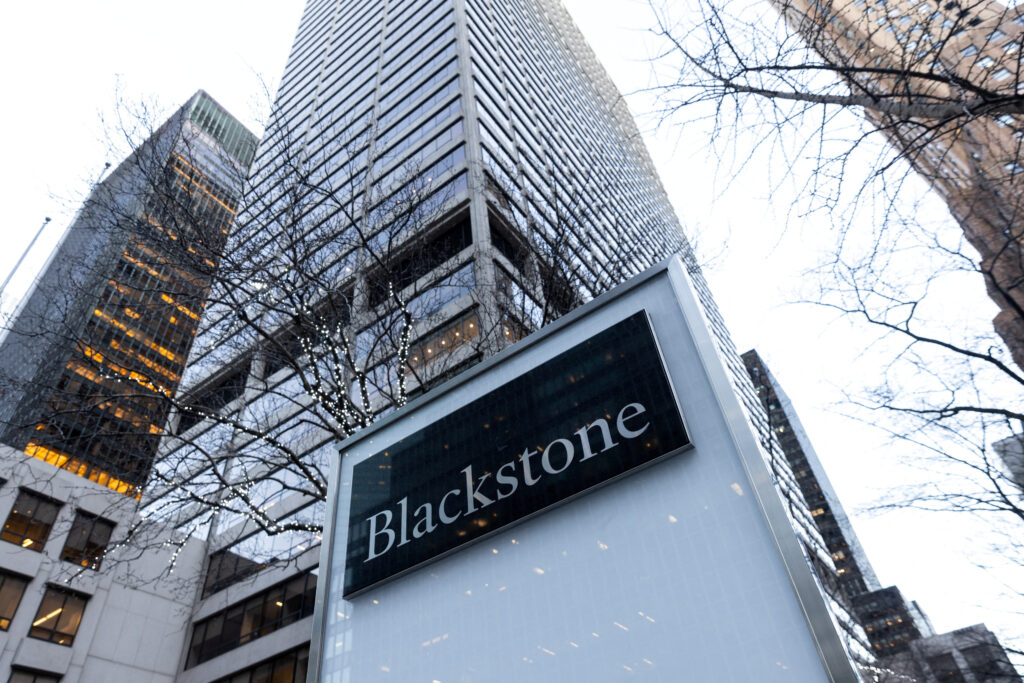
Alternative asset manager Blackstone said on March 2 that its flagship private-credit fund, BCRED, saw a sharp rise in withdrawal requests in the first quarter.
The company let clients pull a bigger-than-usual $3.7 billion from the $82 billion fund. Adding $2 billion of new commitments left net withdrawals at $1.7 billion.
The surge in requests led the fund to raise its usual 5% quarterly redemption cap to 7%, while Blackstone and its employees injected $400 million to meet all withdrawals.
APOLLO GLOBAL
Apollo Global’s $25 billion private credit fund said on March 23 it was capping redemptions at 5% of its shares after investors sought to withdraw roughly 11.2% of the total outstanding shares.
The fund said the decision to buy back less than investors requested was consistent with its objectives for liquidity, or the ability to meet its payment obligations without damaging the value of its assets.
The withdrawals leave the fund with about $730 million of gross outflows for the period, balancing out inflows of about $724 million.
The fund expects to return about 45% of the requested capital to each redeeming investor.
ARES
Ares Management’s -credit fund limited redemptions at 5% after investors sought to withdraw roughly 11.6% of the total outstanding shares, it disclosed in a regulatory filing on March 24.
The majority of the redemption requests were made by a limited number of family offices and smaller institutions that represent less than 1% of its over 20,000 shareholders, it said.
Ares Strategic Income Fund will return $524.5 million, or 5% of its outstanding shares.
KKR
KKR’s non-traded private credit fund limited redemptions at 5% of shares after requests for withdrawals surged in the first quarter, according to a letter to shareholders on March 31.
The fund, KKR FS Income Trust, received repurchase requests totaling roughly 6.3% of outstanding shares in the first three months of 2026, of which it plans to satisfy about 80%.
CLIFFWATER
Cliffwater LLC’s private-credit fund capped its share repurchases at 7% in the first quarter due to investor redemptions of around 14%, according to Bloomberg News.
As an interval fund, it is required to repurchase shares quarterly. It fixed the rate at 5%, with the option to buyback up to 7%, according to the report.