Author: Heathermorris2

  • Private credit anxieties lead to redemption limitations and stricter lending.

    Private credit anxieties lead to redemption limitations and stricter lending.

    The unease in the private credit market has spread to Wall Street; as many funds set withdrawal limits, some major U.S. banks have tightened lending to the trillion sector.

    Concerns over valuations and transparency, along with the high-profile bankruptcies of auto parts supplier First Brands and car dealer Tricolor, have negatively impacted the market.

    According to Moody’s, as of December 31, U.S. banks had approximately $348 billion in credit debt to non-depository financial institutions and $341 billion to private equity funds.

    Shares of alternative asset managers have also declined this year due to concerns about the valuations of the software companies they own or finance; as rapid advancements in artificial intelligence pose a threat to traditional business models.

    Below is a list of some recent moves by Wall Street’s largest banks and private equity funds:

    BLUE OWL

    Private capital firm Blue Owl Capital said on April 2 it would cap withdrawals from two retail-focused funds after receiving a surge in redemption requests.

    Investors asked to withdraw 40.7% of the shares in technology-focused Blue Owl Technology Income Corp (OTIC), and 21.9% of shares in larger fund Blue Owl Credit Income Corp (OCIC).

    Blue Owl in late February said it was selling $1.4 billion in assets from three of its credit funds so it can return capital to investors and pay down debt, ​and permanently halted redemptions at one of the funds.

    “We’re not halting redemptions, we are simply changing the method by which we’re providing redemptions,” Blue Owl co-President Craig Packer had said at the time.

    JPMORGAN CHASE

    The largest U.S. bank ​has reduced the value of some loans to private credit funds after reviewing the impact of market turmoil around software companies, Reuters reported last week, citing two people familiar with the situation.

    JPMorgan ⁠went through its financing portfolio – name by name and then sector by sector – and put different marks on loans such as those with underlying software exposure, one of the sources said.

    The re-marking does not happen often but this isn’t the first ​time the bank has re-marked loans, the first source told Reuters, adding the move was “important to do when markets warrant it rather than waiting for a crisis to come along.”

    JPMorgan’s credit agreements for the private-credit space allow it to re-mark valuations based ​on the collateral of the fund if there is a market dislocation, the source said, adding the marks are not significant.

    The move to mark down the value of certain loans to private credit players will reduce lending to the funds, Reuters reported, citing a source familiar with the matter.

    MORGAN STANLEY

    London, UK – September 4, 2015: The facade and sign of modern bank building from Morgan Stanley with reflections.

    The Wall Street banking giant limited redemptions at one of its private credit funds after investors sought to withdraw almost 11% of shares outstanding, according to a regulatory filing.

    Morgan Stanley’s North Haven Private Income Fund (PIF), which was invested in 312 borrowers across 44 industries as of January 31, returned ​roughly $169 million, or about 45.8% of investors’ tender request, for the quarter.

    BLACKROCK

    The world’s largest asset manager said on March 6 that it has restricted withdrawals from its flagship HPS Corporate Lending Fund (HLEND) after a jump in requests.

    HLEND received $1.2 billion in withdrawal ​requests in the first quarter, equal to about 9.3% of its net asset value. The fund told investors it would distribute $620 million under its quarterly redemption program, reaching the 5% limit at which managers can curb further withdrawals.

    Subscriptions to the fund were $840 million in the first ‌quarter, lower than ⁠the $1.2 billion that investors originally sought to withdraw. According to company documents, 19% of HLEND’s portfolio is tied up in software.

    OAKTREE

    A private credit fund owned by Oaktree Capital Management decided to honor the full 8.5% in redemption requests it received in the first quarter, according to a regulatory filing on March 27.

    The fund will repurchase roughly 13.9 million, or 6.8% of the outstanding shares from investors in the Oaktree Strategic Credit Fund (OSC), while Oaktree’s parent Brookfield will purchase another 1.7% of shares to help meet 100% of the redemption requests.

    BLACKSTONE

    FILE PHOTO: Signage is seen outside the Blackstone Group headquarters in New York City, U.S., January 18, 2023. REUTERS/Jeenah Moon

    Alternative asset manager Blackstone said on March 2 that its flagship private-credit fund, BCRED, saw a sharp rise in withdrawal requests in the first quarter.

    The company let clients pull a bigger-than-usual $3.7 billion from the $82 billion fund. Adding $2 billion of ​new commitments left net withdrawals at $1.7 billion.

    The surge in requests led ​the fund to raise its usual 5% quarterly redemption ⁠cap to 7%, while Blackstone and its employees injected $400 million to meet all withdrawals.

    APOLLO GLOBAL

    Apollo Global’s $25 billion private credit fund said on March 23 it was capping redemptions at 5% of its shares after investors sought to withdraw roughly 11.2% of the total outstanding shares.

    The fund said the decision to buy back less than investors requested was consistent with its objectives for liquidity, or ​the ability to meet its payment obligations without damaging the value of its assets.

    The withdrawals leave the fund with about $730 million of gross outflows for the period, balancing out ​inflows of about $724 million.

    The fund expects ⁠to return about 45% of the requested capital to each redeeming investor.

    ARES

    Ares Management’s -credit fund limited redemptions at 5% after investors sought to withdraw roughly 11.6% of the total outstanding shares, it disclosed in a regulatory filing on March 24.

    The majority of the redemption requests were made by a limited number of family offices and smaller institutions that represent less than 1% of its over 20,000 shareholders, it said.

    Ares Strategic Income Fund will return $524.5 million, or 5% of its outstanding shares.

    KKR

    KKR’s non-traded private credit fund limited redemptions at 5% ⁠of shares after ​requests for withdrawals surged in the first quarter, according to a letter to shareholders on March 31.

    The fund, KKR FS Income Trust, received repurchase requests totaling ​roughly 6.3% of outstanding shares in the first three months of 2026, of which it plans to satisfy about 80%.

    CLIFFWATER

    Cliffwater LLC’s private-credit fund capped its share repurchases at 7% in the first quarter due to investor redemptions of around 14%, according to Bloomberg News.

    As an interval fund, it is required to repurchase shares quarterly. It fixed the rate at 5%, with the option to buyback up to 7%, according to the report.

  • Consumer megadeals make a rare comeback in the first quarter

    Consumer megadeals make a rare comeback in the first quarter

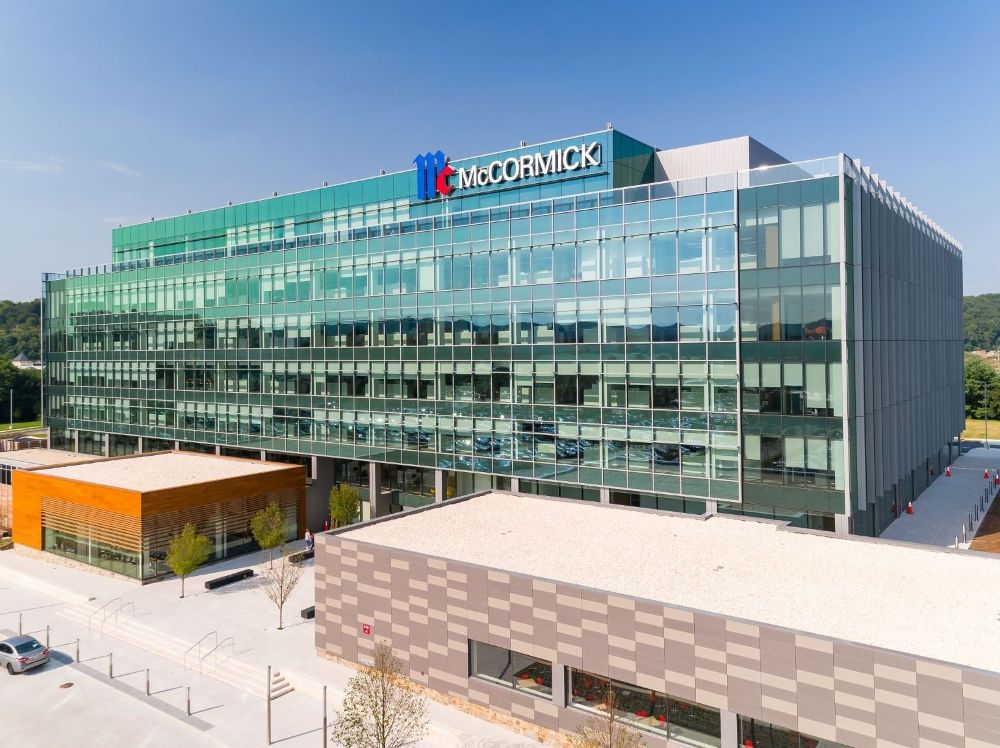
    Two major mergers involving U.S. food companies, occurring within 24 hours, have achieved a success not seen in the consumer sector for over a decade, ranking among the largest global transactions of the first quarter.

    This week’s back-to-back announcements – Sysco’s 9 billion acquisition of Jetro Restaurant Depot and McCormick’s $45 billion acquisition of Unilever’s food business listed on the London Stock Exchange – reflect a broad reshaping across the industry in response to changing consumer tastes, rising tariffs, and slowing growth.

    The deal by spice producer McCormick ranked second globally in the first quarter, following Amazon’s $50 billion investment in OpenAI, while the deal by food distributor Sysco ranked seventh – according to LSEG data, this is the first time since 2015 that two U.S. consumer deals have entered the top 10 in the same quarter. Such rankings are dominated by deals in sectors like technology and energy; consumer companies rarely stand out.

    According to LSEG, the two consumer deals in 2015 were Coty’s acquisition of Procter & Gamble’s beauty business and the merger of three Coca-Cola bottling companies.

    Big deals in the consumer sector are not limited to food. Talks are ongoing between Jack Daniel’s maker Brown-Forman and France’s Pernod Ricard and beauty company Estée Lauder and Barcelona-based Puig; these combinations could create companies worth tens of billions of dollars.

    Jens Welter, co-head of Citi’s North America investment banking division, said, “The dynamics around alcoholic beverages are different from non-alcoholic beverages, non-alcoholic beverages are different from food, and non-alcoholic beverages are different from beauty.” “Most fast-moving consumer goods companies have emerged from a period of high inflation that has affected consumers and volume growth…” Therefore, alternative growth paths are being sought, and this is happening thru consolidation. “Therefore, alternative growth paths are being sought, and this is happening thru consolidation.”

    Mega deals across all sectors reached record levels in the first quarter, with many being cross-border. Market participants said that becoming a more global company without being overly reliant on a single market provides a safeguard in an increasingly volatile world.

    Against this backdrop, the acquisitions had been in the works for years for both McCormick and Sysco.

    FILE PHOTO: McCormick & Company spices are seen on display in a store in Manhattan, New York City, U.S., March 29, 2022. REUTERS/Andrew Kelly/File Photo

    Unilever had been divesting its food business for years, and in December, it completed the separation of its ice cream unit, leaving Hellmann’s and Knorr as its largest remaining food brands. When new CEO Fernando Fernandez began signaling a sharper focus on beauty and wellness, McCormick interpreted it as a sign that the food business was up for grabs, a source familiar with the matter said. In September, Fernandez said at the Barclays consumer conference: “I have seven clear priorities: more beauty, more health, more personal care, more premium products, more e-commerce, more U.S., more India…” Beauty and personal care currently account for 51% of our revenue, and we aim to increase this to two-thirds of our revenue in the medium term. Beauty and personal care currently make up 51% of our revenue, and we aim to increase this to two-thirds of our revenue in the medium term.” At Jetro Restaurant Depot, succession was a significant factor.

    At Jetro Restaurant Depot, succession was a significant factor. The founder of the private, family-owned company, Nathan Kirsh, is in his 90s and his children do not run the business. In an interview with Reuters, Sysco’s CEO Kevin Hourican said they decided that the best place to carry the family’s business to the next generation was Sysco.

    As a key point, Brown-Forman, Pernod Ricard, Estée Lauder, and Puig are also supported by founding families.

    “The market environment is quite unstable and shows no signs of stabilizing, so scale and diversification are incredibly critical,” says Jeannette Smits van Oyen, head of global consumer and retail investment banking at JPMorgan. “Also, it is no coincidence that during these times it is becoming more fundamental to evaluate what the alternatives to these decisions might be for family members.” Additionally, it is not coincidental that during these periods, evaluating how alternatives to these decisions might be for family members has become more fundamental. Analysts and sources familiar with the companies said that any deal between Brown-Forman and Pernod Ricard or Estée Lauder and Puig would be at least partially defensive.

    Analysts and sources familiar with the companies said any deal between Brown-Forman and Pernod Ricard or Estée Lauder and Puig would be at least partly defensive. The alcoholic beverage sector is facing slowing sales and a generational shift as younger consumers drink less, while prestige beauty companies are under pressure to better compete with L’Oréal, which bought Kering’s beauty division last year.

    PwC’s U.S. consumer markets deals leader, Mike Ross, said consumer companies are under more pressure than ever to stay ahead of rapidly changing generational tastes. “They need to be much more agile and ready to adapt to these signals faster than ever before,” he said.

    Overall, this activity indicates that there will be more deal momentum in the consumer sector for the rest of the year.

    Smits van Oyen said, “These deals will never happen until they happen, and they will lead to the final deals.”

  • Lorie Logan says US oil producers unlikely to provide near-term relief for consumers

    Lorie Logan says US oil producers unlikely to provide near-term relief for consumers

    Dallas Federal Reserve President Lorie Logan said on Thursday that U.S. oil ​producers are unlikely to boost output and shield consumers from higher gasoline prices any time soon.

    Stating that the price U.S. producers want to see in order to start drilling operations is slightly below $70 per barrel, which is well below the current price of approximately 10 per barrel, Logan said at a conference organized by the regional Fed bank: “Prices need to be maintained at or above this breakeven level so that companies can make the necessary investments, which could eventually provide relief for consumers.” Logan, stating that the price U.S. producers want to see to start drilling is just below $70 per barrel, which is well below the current price of about 10 per barrel, said at a conference held at a regional Fed bank: “Prices need to be sustained at or above this breakeven level so that firms can make the necessary investments, which could eventually provide relief for consumers.”

    Logan said that U.S. oil companies “should have a sense that these high prices will continue for a while longer, and therefore, I haven’t heard that we will see a dramatic increase in production in the short term.”

    Logan’s comments indicate that the rise in energy prices due to the US-Israel war with Iran will continue to be a short-term issue for inflation and overall economic activity, despite the US having buffer mechanisms that other countries closer to the conflict do not possess.

    The Dallas Fed President stated that inflation continues to be one of the most important economic concerns. “Regarding inflation, even before the conflict in the Middle East, I wasn’t sure we would be moving toward our 2% target,” he said. “Restoring price stability, bringing inflation back to 2%, is incredibly important because stable inflation is the bedrock of a strong economy.” “Restoring price stability and bringing inflation back to 2% is incredibly important because stable inflation is the cornerstone of a strong economy.”

    Repeating the monetary policy view of many of her colleagues, Logan said the current uncertainty means the Fed should watch and wait as it gathers information on the economy’s performance.

    “I really enjoy thinking about events thru scenarios right now,” Logan said. “I think the policy is positioned to adjust based on incoming data, and we are ready to make adjustments to the policy path as needed. “I think the policy is positioned to adjust itself based on incoming data, and we are ready to make adjustments along the policy path when necessary.”

    ENERGY PRICE WOES

    Rising energy prices currently pose a significant challenge for the Fed. The US central bank had lowered interest rates by 0.75% last year to support the softening labor market amid still high price pressures.

    The war is increasing the risk of further inflation, creating new problems for the job market and overall economic growth. As a result, the Fed, tasked by Congress with controlling inflation and promoting maximum sustainable job growth, faces a challenging balance.

    The central bank traditionally ignores energy price increases because they temporarily affect overall price pressures and have a limited impact on core prices. However, St. Louis Fed President Alberto Musalem said in a statement on Wednesday that the current prolonged period of inflation above the target increases the risk of energy inflation becoming a longer-term economic problem.

    In a note published by Capital Economics, it was stated that the “indirect” effect of higher energy prices on inflation could vary from 0.7% in the US to approximately 1.5 percentage points in the Eurozone, with the UK and Japan possibly falling somewhere in between.

    The Personal Consumption Expenditures Price Index, the Fed’s preferred inflation gage, rose 2.8% in January and, more troublingly, 3.1% excluding food and energy costs.

    Inflation fears have led to speculation in the markets that higher interest rates may be needed to counter rising inflation. The Fed left its benchmark overnight interest rate in the 3.50%-3.75% range at last month’s meeting and released projections showing policymakers expect a rate cut in 2026.

    Logan said the war “increased our level of uncertainty about the economy and future outlook, making our jobs more complex because it increased the risks on both sides of our tasks.”

    If the war is resolved quickly, he stated that its economic impact would probably be “moderate.” However, he also added that a longer-lasting war could have more “negative” effects, which could “move in opposite directions regarding our dual mission and cause significant tension between our responsibilities.”

  • Goldman Sachs completes Innovator Capital acquisition, increasing ETF assets to $90 billion.

    Goldman Sachs completes Innovator Capital acquisition, increasing ETF assets to $90 billion.

    On Thursday, Goldman Sachs announced the acquisition of Innovator Capital Management, a provider of active exchange-traded funds. This move expands the Wall Street bank’s footprint in the rapidly developing industry.

    Active ETFs are gaining popularity among investors due to their low costs and customizable methods, while passive index products have lacked performance.

    The Weekly in Breakingviews newsletter features insights and ideas from Reuters’ global financial commentary team. Sign up here. 

    In December, the bank announced the acquisition of Innovator Capital, which manages 171 ETFs with $31 billion in assets, for approximately $2 billion.

    Goldman Sachs CEO David Solomon said, “With this acquisition, we have taken a transformative step in our commitment to providing advanced investment solutions designed to deliver specific outcomes for investors thru market cycles.”

    Following the agreement, Innovator’s co-founders Bruce Bond and John Southard will join Goldman Sachs as advisory directors; Chief Investment Officer Graham Day and Head of Distribution Trevor Terrell will serve as partners.

    Goldman Sachs stated that more than 70 Innovator employes will also join the company.

    Goldman Sachs Asset Management currently manages approximately 240 ETFs worldwide, with total ETF assets reaching 90 billion dollars.

    Innovator uses a strategy called defined outcome strategy, which employs exchange-traded options to protect investors from market downturns while limiting upside movement to help cover the cost of protection.

    Graham Day told Reuters, “What we found is that many advisors have clients who are pre-retirement or in retirement.” “They’re prioritizing capital preservation over capital appreciation,” he said.

    Day said that the current size of the defined outcome market is between 70 billion and 80 billion dollars and that it is growing faster than the traditional ETF space.

    Goldman Sachs Asset Management Chief Transformation Officer Bryon Lake said, “Traditional correlations are breaking down. Therefore, more and more investors are looking for different ways to gain market exposure,” he said.

  • Despite Iran War putting pressure on businesses, the BOJ keeps the door open for rate hikes

    Despite Iran War putting pressure on businesses, the BOJ keeps the door open for rate hikes

    Tokyo – A senior official at the Bank of Japan said they would continue to raise interest rates if economic forecasts materialize. This statement reinforces the tightening trend despite new surveys showing that rising fuel costs linked to the Iran war are putting pressure on companies.

    In his speech to parliament on Friday, Koji Nakamura, the Director of Monetary Policy at the Bank of Japan, stated that high oil prices not only pose a risk to economic growth but can also raise long-term inflation expectations and increase core inflation.

    You can subscribe to the “Week Ahead” newsletter, which offers insights and ideas from Reuters’ global financial commentary team, here.

    Nakamura said that with companies becoming more willing to raise prices and wages, the core inflation pressure from oil could be greater than in the past.

    Nakamura said, “If our economic and price projections materialize, we will likely continue to raise interest rates,” and added that the degree and timing of future increases would depend on economic, price, and financial conditions.

    “At each policy meeting, we will make an appropriate decision by updating our economic and price projections and our views on risks based on the current data,” he added.

    Nakamura’s comments emphasize that even as new pressures from outside Japan increase, the BOJ is ready to continue with moderate interest rate hikes. The rising fuel costs and more expensive imports due to the weak yen are increasing domestic inflation, making the central bank’s delicate balancing act more challenging.

    This message came as the BOJ has been increasingly adopting a hawkish tone in recent weeks; this rhetoric has led the markets to price in a nearly 70% probability of another rate hike within this month.

    However, the backdrop is quite tense. Japan’s heavy reliance on Middle Eastern fuel leaves its economy extremely vulnerable to energy shocks and supply disruptions caused by war.

    These tensions are already reflected in the corporate sector. According to a survey published on Friday by the private think tank Teikoku Databank, business confidence sharply deteriorated in March; many sectors, from transportation and retail to machinery and chip production, are concerned about high fuel costs.

    This is the first time since September 2023 that confidence has deteriorated across all 10 sectors covered in the online survey conducted between March 17-31, weeks after the US-Israel attacks on Iran on February 28. The yen has lost more than 2% against the dollar since the war began.

    According to the survey, a fertilizer producer stated, “Rising crude oil prices are increasing a wide range of input costs, while the flow of goods is slowing down.”

    A separate private survey published on Friday painted an equally bleak picture, showing that service sector growth has fallen to its lowest level in three months and confidence has dropped to its weakest level since the 2020 pandemic.

    While Bank of Japan (BOJ) officials warn that the war has the potential to fuel inflation, other analysts believe that the anticipated shortage of naphtha and other chemical goods could represent a greater threat and destabilize the already shaky economy. The central bank may provide further detail on how it considers these conflicting risks in its quarterly regional report, which will be released on Monday.

    The BOJ stopped its decade-long major stimulus program in 2024 and raised interest rates numerous times, with the short-term policy rate reaching 0.75% in December, the highest level in 30 years.

    Chairman Kazuo Ueda declared unequivocally that as long as a modest economic recovery keeps inflation within the bank’s 2% target, the door to interest rate hikes remains open.

  • Blue Owl restricted withdrawals from two of its funds following a historic surge in withdrawal requests.

    Blue Owl restricted withdrawals from two of its funds following a historic surge in withdrawal requests.

    Blue Owl (OWL.N) informed investors on Thursday that it had limited withdrawals from two of its funds following record-level redemption requests in the first quarter. Concerns related to artificial intelligence led to investors exiting the technology-focused fund.

    Private credit companies like Blue Owl are feeling the pressure from the recent market downturn, leading some investors to pull back from these investments due to concerns about valuations and credit standards following several high-profile bankruptcies. Founded in 2021, Blue Owl has become a symbol of private credit funds struggling with high redemption rates.

    Anxious investors are indiscriminately selling everything with heavy exposure to the software sector due to the threat posed by developments in artificial intelligence to disrupt all sectors of the economy. The company had previously stated that about 8% of its approximately $300 billion in assets was invested in software.

    According to various calculations, Blue Owl investors were asked to withdraw $5.4 billion in shares between two funds in the first quarter.

    This is the latest example added to the growing list of firms like KKR, Apollo, and BlackRock that have restricted buybacks in recent weeks.

    Thursday’s news brought Blue Owl shares down to an all-time low in midday trading. The stock has been losing value for months and has lost nearly half of its market value since the beginning of 2026.

    Shares of other private equity managers, including Ares (ARES.N), Apollo Global (APO.N), Blackstone (BX.N), and Carlyle (CG.O), also fell.

    UNPRECEDENTED WITHDRAWALS

    Investors asked to withdraw 40.7% of shares in the $6.2 billion technology-focused Blue Owl Technology Income Corp (OTIC) fund, and 21.9% of shares in the $36 billion Blue Owl Credit Income Corp (OCIC) fund, according to preliminary data released by the company. Those percentages rank among the highest quarterly redemption requests the industry has ever seen, ​a person familiar with the matter said.

    The firm said it plans to only fill 5% of the requests, saying there was a “meaningful disconnect” between public sentiment on private credit ​funds and the underlying performance of its portfolio.

    “It’s another reminder about how illiquid this sector is,” said Sam Stovall, chief investment strategist of CFRA Research in New York. He said retail investors thinking ‌about investing ⁠in private equity may want to think twice. “It is a sector that is meant for professionals.

    “Don’t try this at home. Private credit does not have the kind of liquidity that public markets would have and it’s very difficult to get the money out as quickly as you might want it,” Stovall said.

    The funds, structured as what are known as business development companies (BDCs), raise equity and pair it with leverage to finance loans, mainly to mid-sized companies. Some of them trade on public markets, where investors can buy and sell shares. Non-traded funds like Blue ​Owl’s give investors quarterly opportunities to withdraw ​a portion of their holdings, which ⁠is usually capped at 5% of shares.

    PAST REDEMPTION LIMITS

    In the last quarter, Blue Owl preferred to allow OTIC shareholders to repurchase 15.4% of their shares.

    The CEO of the funds, Craig Packer, said in two updates to shareholders, “In the first quarter of 2026, there was an increase in bidding activities in the non-public BDC sector; this reflects a period of heightened negative sentiment toward the asset class, intensified by peers announcing bidding results.”

    Blue Owl stated that the decline in the software sector has created opportunities to add to its portfolio.

    Markets had reacted to some of Blue Owl’s previous plans regarding its BDCs, particularly the proposal to merge a publicly traded vehicle with a private version last year and to finance payments by selling assets instead of quarterly buybacks.

    The concentration of redemption requests among a small number of investors (1% of OCIC shareholders, who account for the majority of redemption requests) suggests that this exit is driven more by institutional investors or asset management clients rather than widespread retail panic.

    Blue Owl stated that negative sentiment is more severe in technology funds with a smaller shareholder base and greater exposure to the software sector.

    The company said, “Increasing market concerns regarding software companies related to artificial intelligence have significantly affected investors’ perceptions of software-related credit risks.”

  • Price of diamonds crashes to lowest level this century

    Price of diamonds crashes to lowest level this century

    The diamond industry is in free fall. The structural changes triggered by lab-grown gemstones, weak consumer demand, and pullbacks in key markets have pushed prices to their lowest levels in years, shaking miners, retailers, and companies that have long controlled the market.

    According to BriteCo, the average price of natural 1-carat diamonds fell from approximately $6,000 in 2021 to around $4,200 in 2025. The average engagement ring prices fell from approximately $6,000 in 2021 to $5,200 in 2024. There is no sign of the declines reversing.

    The deeper crisis is structural. According to BriteCo, lab-grown diamonds, which are chemically identical to mined stones, are 73% to 83% cheaper than their natural counterparts. According to Draco Diamond, the retail price of a 1-carat lab-grown diamond that sold for $3,410 in 2020 is now around $750 to ,000.

    Lab-grown diamonds now dominate

    The change in consumer preferences has been rapid and decisive. In 2019, lab-grown diamonds accounted for only 5.2% of diamond jewelry sales, but by 2024, according to BriteCo, this figure had captured more than 45% of engagement ring purchases in the U.S.

    According to Draco Diamond, referencing Edahn Golan Diamond Research and StoneAlgo, the prices of laboratory-grown stones fell by 74% between 2020 and 2024 due to a more than 300% increase in global production capacity following the large-scale entry of diamond cutting firms in India into the market.

    One of the world’s largest jewelry brands, Pandora, completely removed natural diamonds from its collections and turned to lab-grown and alternative stones. Sales have increased since this transition.

    De Beers absorbs the damage

    No company has felt the impact more than De Beers, the 137-year-old miner that once controlled the global diamond market. Anglo American, which owns 85% of De Beers, took a $2.3 billion pre-tax impairment on the unit in its 2025 results, De Beers’ own preliminary results reveal.

    Total writedowns on De Beers over three years reached $6.8 billion, according to Mining.com. Anglo American posted a $3.7 billion net loss for 2025 as a result.

    De Beers’ own EBITDA loss widened to $511 million in 2025 from $25 million the prior year, shared Mining Weekly. Rough diamond production fell 12% to 21.7 million carats as the company scaled back output to match prevailing demand.

    De Beers also cut its rough diamond prices at its first sale of 2026, per Rapaport. The company had been selling discounted stones privately while maintaining official prices roughly 25% above market rate, a strategy that became unsustainable. When accounting for those stock rebalancing deals, De Beers’ effective price index fell 25% year over year.

    TheStreet Newsletters

    Get the latest in market trends or guidance on simple ways to grow your wealth.

    or sign in with

    By signing up I agree to the Terms of Use and acknowledge that I have read the Privacy Policy. You may unsubscribe from email communication at anytime.

    Key numbers behind the diamond market crisis:

    • Natural 1-carat diamonds: About $4,200 in 2025, down from about $6,000 in 2021, per BriteCo
    • Lab-grown 1-carat diamonds: Approximately $750-$1,000 in 2026, down 74% from 2020, Draco Diamond confirmed
    • Lab-grown share of U.S. engagement ring purchases: 45% in 2024, up from 5.2% in 2019, BriteCo noted
    • De Beers’ effective rough price index: Down 25% in 2025 including stock rebalancing, according to Rapaport
    • Anglo American’s total De Beers writedowns: $6.8 billion over three years, per Mining.com
    A collection of diamonds is laid on a sorting table in Brussels
    Lab-grown diamonds are becoming the default for many jewelry shoppers.

    Why buyers are walking away from natural diamonds

    The shift is not only about price.

    Lab-grown diamonds carry the same chemical and optical properties as mined stones. GIA and IGI certify them using the same 4Cs framework, according to MadisonDia. For many buyers, the ethical and environmental case for lab-grown adds to the appeal.

    More Gold:

    The industry is bifurcating. Natural diamonds are repositioning as rare, heritage luxury items for those who value provenance. Lab-grown diamonds have become the default for buyers who want a larger, higher-quality stone for the same budget, per BriteCo.

    De Beers acknowledged the shift directly in its 2025 preliminary results, citing “greater shifting of customer preference between natural diamonds and laboratory-grown diamonds” as a key driver of its lower price forecasts and impairment.

    The road ahead for the diamond industry

    Anglo American is actively working to sell De Beers as part of a broader restructuring. The company stated, according to Rapaport, that it is “in advanced discussions with a select group of interested parties.”

    As consecutive losses increased, finding a buyer became more difficult.

    According to Mining Weekly, De Beers has lowered its 2026 production forecast from a previous range of 26 to 29 million carats to 21 to 26 million carats. The company is targeting unit costs to decrease from $86 per carat in 2025 to approximately $80 per carat in 2026.

    For natural diamond miners, the challenge is not just the price. At the same time, importance as well. The market they once controlled is being reshaped by technology, changing consumer values, and an abundance of supply that natural scarcity can no longer compensate for.