Category: Market Crashes

  • Price of diamonds crashes to lowest level this century

    Price of diamonds crashes to lowest level this century

    The diamond industry is in free fall. The structural changes triggered by lab-grown gemstones, weak consumer demand, and pullbacks in key markets have pushed prices to their lowest levels in years, shaking miners, retailers, and companies that have long controlled the market.

    According to BriteCo, the average price of natural 1-carat diamonds fell from approximately $6,000 in 2021 to around $4,200 in 2025. The average engagement ring prices fell from approximately $6,000 in 2021 to $5,200 in 2024. There is no sign of the declines reversing.

    The deeper crisis is structural. According to BriteCo, lab-grown diamonds, which are chemically identical to mined stones, are 73% to 83% cheaper than their natural counterparts. According to Draco Diamond, the retail price of a 1-carat lab-grown diamond that sold for $3,410 in 2020 is now around $750 to ,000.

    Lab-grown diamonds now dominate

    The change in consumer preferences has been rapid and decisive. In 2019, lab-grown diamonds accounted for only 5.2% of diamond jewelry sales, but by 2024, according to BriteCo, this figure had captured more than 45% of engagement ring purchases in the U.S.

    According to Draco Diamond, referencing Edahn Golan Diamond Research and StoneAlgo, the prices of laboratory-grown stones fell by 74% between 2020 and 2024 due to a more than 300% increase in global production capacity following the large-scale entry of diamond cutting firms in India into the market.

    One of the world’s largest jewelry brands, Pandora, completely removed natural diamonds from its collections and turned to lab-grown and alternative stones. Sales have increased since this transition.

    De Beers absorbs the damage

    No company has felt the impact more than De Beers, the 137-year-old miner that once controlled the global diamond market. Anglo American, which owns 85% of De Beers, took a $2.3 billion pre-tax impairment on the unit in its 2025 results, De Beers’ own preliminary results reveal.

    Total writedowns on De Beers over three years reached $6.8 billion, according to Mining.com. Anglo American posted a $3.7 billion net loss for 2025 as a result.

    De Beers’ own EBITDA loss widened to $511 million in 2025 from $25 million the prior year, shared Mining Weekly. Rough diamond production fell 12% to 21.7 million carats as the company scaled back output to match prevailing demand.

    De Beers also cut its rough diamond prices at its first sale of 2026, per Rapaport. The company had been selling discounted stones privately while maintaining official prices roughly 25% above market rate, a strategy that became unsustainable. When accounting for those stock rebalancing deals, De Beers’ effective price index fell 25% year over year.

    TheStreet Newsletters

    Get the latest in market trends or guidance on simple ways to grow your wealth.

    or sign in with

    By signing up I agree to the Terms of Use and acknowledge that I have read the Privacy Policy. You may unsubscribe from email communication at anytime.

    Key numbers behind the diamond market crisis:

    • Natural 1-carat diamonds: About $4,200 in 2025, down from about $6,000 in 2021, per BriteCo
    • Lab-grown 1-carat diamonds: Approximately $750-$1,000 in 2026, down 74% from 2020, Draco Diamond confirmed
    • Lab-grown share of U.S. engagement ring purchases: 45% in 2024, up from 5.2% in 2019, BriteCo noted
    • De Beers’ effective rough price index: Down 25% in 2025 including stock rebalancing, according to Rapaport
    • Anglo American’s total De Beers writedowns: $6.8 billion over three years, per Mining.com
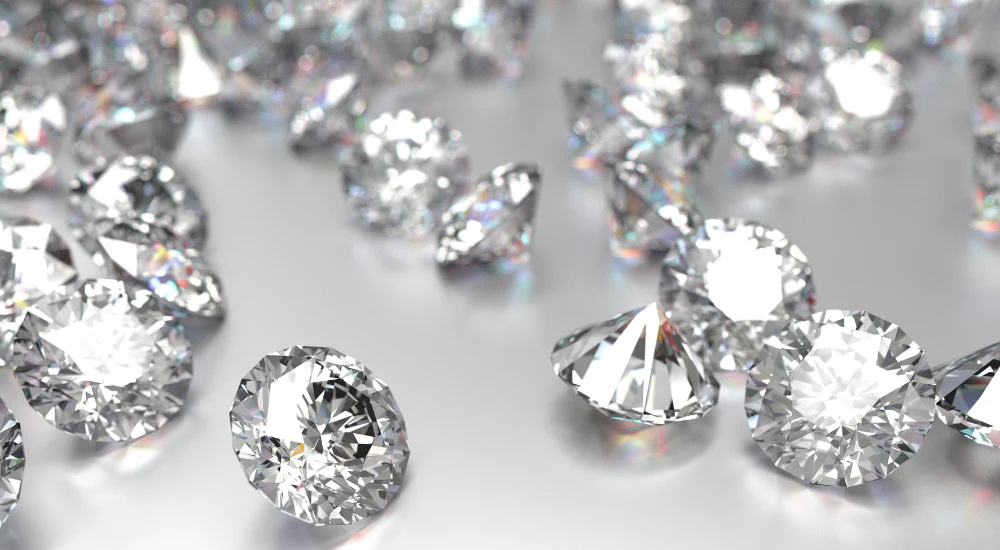
    A collection of diamonds is laid on a sorting table in Brussels
    Lab-grown diamonds are becoming the default for many jewelry shoppers.

    Why buyers are walking away from natural diamonds

    The shift is not only about price.

    Lab-grown diamonds carry the same chemical and optical properties as mined stones. GIA and IGI certify them using the same 4Cs framework, according to MadisonDia. For many buyers, the ethical and environmental case for lab-grown adds to the appeal.

    More Gold:

    The industry is bifurcating. Natural diamonds are repositioning as rare, heritage luxury items for those who value provenance. Lab-grown diamonds have become the default for buyers who want a larger, higher-quality stone for the same budget, per BriteCo.

    De Beers acknowledged the shift directly in its 2025 preliminary results, citing “greater shifting of customer preference between natural diamonds and laboratory-grown diamonds” as a key driver of its lower price forecasts and impairment.

    The road ahead for the diamond industry

    Anglo American is actively working to sell De Beers as part of a broader restructuring. The company stated, according to Rapaport, that it is “in advanced discussions with a select group of interested parties.”

    As consecutive losses increased, finding a buyer became more difficult.

    According to Mining Weekly, De Beers has lowered its 2026 production forecast from a previous range of 26 to 29 million carats to 21 to 26 million carats. The company is targeting unit costs to decrease from $86 per carat in 2025 to approximately $80 per carat in 2026.

    For natural diamond miners, the challenge is not just the price. At the same time, importance as well. The market they once controlled is being reshaped by technology, changing consumer values, and an abundance of supply that natural scarcity can no longer compensate for.